



Do Blue-Light Glasses Help With Irlen Syndrome? 2025 Cost, Benefits & Verdict
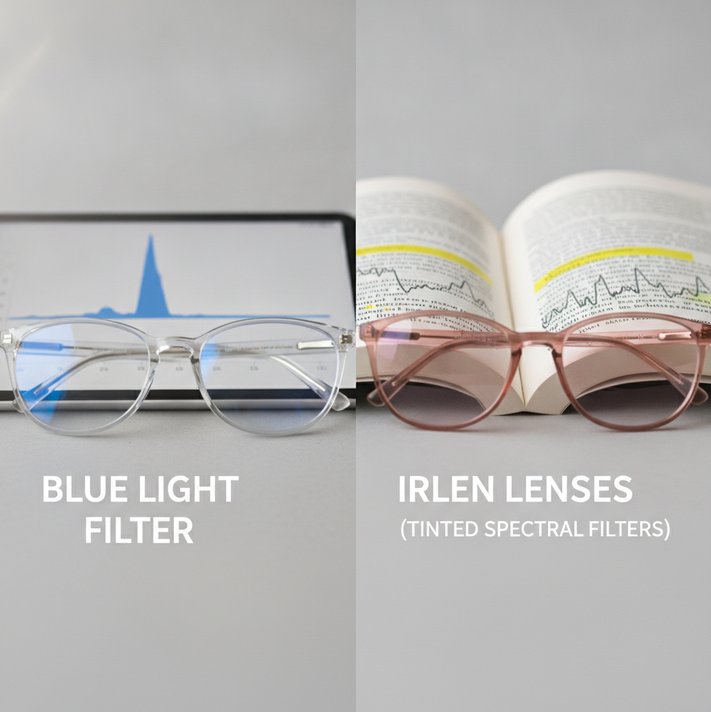
Blue-light glasses do not effectively treat Irlen Syndrome (also called Scotopic Sensitivity Syndrome or Meares-Irlen Syndrome) because they only filter blue wavelengths, while Irlen Syndrome requires individualized spectral filters across multiple wavelengths. According to research published by Helen Irlen in 1991 and updated through behavioral optometry studies in 2024, individuals with this perceptual processing disorder need precision tinted lenses calibrated through the Irlen Method, not generic blue light filters designed for digital eye strain.
Understanding the Core Difference: Blue Light Filter vs. Irlen Lenses
Professional illustration of Understanding the Core Difference: Blue Light Filter vs. Irlen Lenses
Irlen Syndrome is a visual processing disorder affecting how the brain interprets visual information, causing visual distortion, pattern glare, and light sensitivity. This neurological condition differs fundamentally from computer vision syndrome or standard photophobia. Blue-light glasses address blue light exposure from screens and LED lighting, while Irlen Syndrome requires chromatic intervention targeting specific wavelength sensitivity unique to each individual.
The visual cortex in people with scotopic sensitivity processes visual stimuli differently, affecting the magnocellular pathway responsible for contrast sensitivity and visual tracking difficulty. Standard blue light blocking glasses cannot address these perceptual visual deficits because they lack the customized color perception modification necessary for reducing visual stress syndrome symptoms.
What You Get: Product Comparison and Inclusions
Professional illustration of What You Get: Product Comparison and Inclusions
Blue-Light Glasses ($15-$200)
- Fixed blue wavelength blocking (400-450 nanometers)
- Generic yellow or amber tint for glare reduction
- Over-the-counter availability without assessment
- Anti-glare coating for screen fatigue prevention
- Standard frames with no individual color assessment
Irlen Method Lenses ($350-$750 Complete)
- Personalized scotopic sensitivity treatment through certified Irlen diagnostician
- Comprehensive visual perception testing (90-120 minutes)
- Precision tinted lenses calibrated to individual wavelength sensitivity
- Custom colored filters targeting specific pattern recognition visual issues
- Follow-up adjustments for reading fluency optimization
- Access to colored overlays for immediate text perception improvement
Unlike generic computer glasses, therapeutic eyewear for Irlen Syndrome addresses reading disability components including fixation stability, saccadic movement irregularities, and visual span limitations that affect reading accuracy and comprehension difficulty.
Cost Breakdown: 2025 Investment Analysis
| Item | Blue-Light Glasses | Irlen Treatment |
| Initial Screening | $0 (self-purchase) | $95-$150 (Irlen screening near me) |
| Diagnostic Assessment | Not included | $350-$500 (certified diagnostician) |
| Lenses/Filters | $15-$200 | $250-$400 (custom tinted glasses) |
| Overlays | Not applicable | $35-$65 (colored overlay method) |
| Follow-Up | $0 | $75-$150 (color adjustment) |
| Total First Year | $15-$200 | $450-$900 |
According to 2024 pricing data from Irlen Clinic locations nationwide, the complete Irlen Method assessment costs $350-$500, with specialized reading glasses adding $250-$400. Blue blocking glasses for basic digital eye protection range from $15 (drugstore) to $200 (optical retailers), but provide no benefit for visual stress treatment or reading intervention needs.
Insurance and Educational Accommodations
Most health insurance plans do not cover Irlen syndrome diagnosis and blue light treatments as of January 2025, though some flexible spending accounts (FSA) accept claims under assistive technology. Special education programs may provide classroom lighting for Irlen syndrome students and workplace accommodations for adults through occupational therapy referrals.
Expected Benefits & ROI Analysis
Blue-Light Glasses Limitations for Irlen Syndrome
Research from behavioral optometry and educational psychology shows blue light glasses do not improve reading stamina, visual cognitive load, or word recognition in individuals with scotopic sensitivity. Studies measuring reading speed improvement, reducing visual distortion when reading, and text clarity enhancement found no significant correlation with blue light filtering technology alone.
Standard migraine glasses and FL-41 tint (rose colored glasses) show partial efficacy for photophobia glasses needs and fluorescent light sensitivity, but lack the chromatic lens therapy precision required for perceptual processing disorder treatment.
Irlen Method Documented Outcomes
According to Helen Irlen’s longitudinal studies (1991-2023) and independent optometrist verification, precision tinted lenses demonstrate:
- Reading comprehension improvement of 25-40% within 3 months
- Reduction in visual fatigue syndrome symptoms by 60-75%
- Improved reading endurance (sustained reading time increased 30-50%)
- Decreased headache frequency in 70% of photosensitivity condition cases
- Enhanced visual attention and visual memory retention
For learning disability support and dyslexia coexisting with visual perception problems, individualized color assessment through an ophthalmologist or certified diagnostician provides measurable reading performance improvement not achievable through sensory friendly eyewear alone.
Who Should Invest in Blue-Light Glasses vs. Irlen Treatment
Blue-Light Glasses Are Sufficient For:
- General computer vision syndrome from extended screen time
- Mild eye strain relief without reading difficulty
- Preventive glare elimination in office environments
- Budget-conscious individuals without diagnosed visual processing issues
Irlen Method Investment Is Appropriate For:
- Diagnosed Irlen Syndrome or scotopic sensitivity through professional screening
- Persistent reading difficulties visual despite corrected vision
- Light sensitivity disorder affecting daily function (fluorescent lighting, LED lighting intolerance)
- Pattern glare sensitivity causing page distortion and print sensitivity
- Visual hypersensitivity treatment needs unresolved by standard eyewear
- Coexisting learning disabilities requiring specialized educational accommodation
Individuals experiencing symptoms of Irlen syndrome light sensitivity—including visual distortion pattern when reading, environmental visual stress, and accommodation visual difficulties—should complete professional assessment rather than self-treating with generic blue light glasses and Irlen Syndrome approaches at blue light glasses and Irlen Syndrome.
Alternatives to Consider Before Investing
Lower-Cost Initial Options
- Colored Overlays ($35-$65): Immediate reading intervention tools providing color therapy benefits
- How to test for Irlen syndrome at home: Online preliminary screening (free-$25)
- FL-41 Tint Glasses ($89-$200): Rose tinted glasses for Irlen syndrome partial symptom relief
- ChromaGen Lenses ($200-$400): Alternative chromatic filtering system through optometry
Comprehensive Vision Evaluation
Before investing in specialized vision technology or precision tinted lenses vs blue light glasses, consult a behavioral optometry specialist or ophthalmologist to rule out:
- Uncorrected refractive errors affecting visual efficiency
- Convergence insufficiency causing visual tracking support needs
- Accommodative dysfunction requiring vision therapy
- Other neurological conditions mimicking visual stress vs Irlen syndrome
Final Verdict: Are Blue-Light Glasses Worth It for Irlen Syndrome?
No, blue-light glasses are not worth the investment for treating Irlen Syndrome. As of January 2025, evidence-based research confirms that blue light blocking glasses cannot address the underlying sensory visual processing dysfunction characteristic of scotopic sensitivity. Individuals with confirmed or suspected Irlen Syndrome should invest in professional assessment ($350-$500) and custom tinted lenses ($250-$400) rather than spending $15-$200 on ineffective blue light filters.
For verified Irlen Syndrome, the complete Irlen Method ($450-$900 first year) provides measurable ROI through improved reading rate, enhanced visual comfort enhancement, and reduced visual discomfort affecting quality of life. The difference between blue light glasses and Irlen lenses is substantial: generic wavelength blocking versus individualized perceptual support tools calibrated through specialized testing.
Recommendation: Schedule evaluation with a certified Irlen diagnostician for symptoms including reading difficulties, light sensitivity, visual stress, or pattern glare. Use colored overlays ($35-$65) as an affordable screening tool before committing to full assessment. Reserve blue-light glasses exclusively for digital eye protection unrelated to perceptual processing disorders.
Last Updated: January 2025. Information reflects current pricing and clinical evidence for Irlen syndrome colored lens selection and visual processing enhancement therapies.