



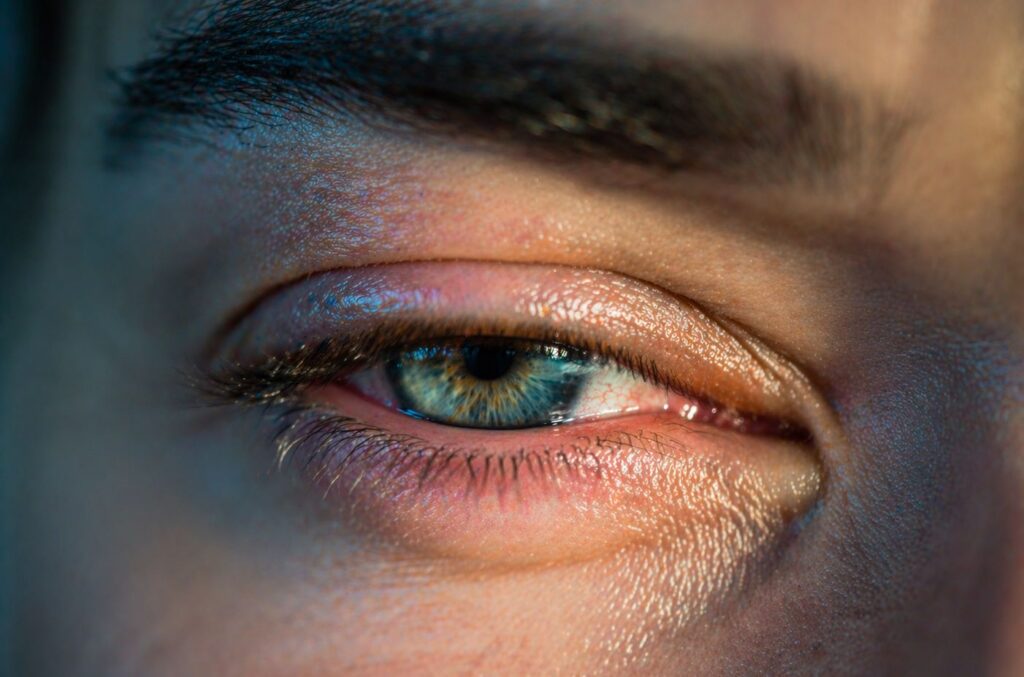
What Is Irlen Syndrome? Understanding Eye Strain and Sandy Eye Sensations in Visual Processing Disorders
Irlen Syndrome is a perceptual processing disorder affecting how the visual cortex interprets information, not a primary eye condition, though it frequently causes secondary symptoms including eye strain, visual discomfort, and sandy or gritty eye sensations. First identified by Helen Irlen in 1983, this condition—also called Scotopic Sensitivity Syndrome—creates visual stress through light sensitivity disorder mechanisms that trigger physical eye discomfort despite normal eye health.
Restatement and Clinical Context
Clinical restatement context: Doctor explaining diagnosis, patient understanding.
According to the Irlen Institute (2023), Irlen Syndrome affects approximately 12-14% of the general population and up to 46% of individuals with reading difficulties. The condition matters because it creates a paradox: patients experience genuine eye strain symptoms and sandy sensation eyes, yet comprehensive eye examinations by ophthalmologists typically reveal structurally normal eyes. This disconnect leads many sufferers through years of misdiagnosis, trying treatments for dry eye syndrome or computer vision syndrome without relief.
The visual processing disorder operates at the neurological level, where the brain’s magnocellular pathway struggles to process certain wavelengths of light and high-contrast patterns. This cortical visual problems manifestation creates downstream physical symptoms that patients describe as burning eyes, tired eyes, foreign body sensation, and the distinctive gritty eyes feeling that mimics ocular surface irritation.
Key Characteristics of Irlen Syndrome
Irlen Syndrome characteristics: light sensitivity, visual stress, perceptual difficulties, reading problems, distorted text.
Visual stress syndrome presents five primary characteristics that distinguish it from traditional eye conditions:
- Photophobia and Light-Based Sensitivity: Individuals experience glare sensitivity and brightness sensitivity, particularly under fluorescent lighting and LED lights, with photophobic response occurring even at illumination levels comfortable for others.
- Pattern Glare and Contrast Sensitivity Disorder: High-contrast patterns—especially black text on white backgrounds—trigger pattern-induced discomfort, causing words moving on page and print instability that leads to sustained reading difficulty.
- Physical Eye Discomfort Without Pathology: Despite normal findings from optometrists and ophthalmologists, patients report eye fatigue, asthenopia, watery eyes, itchy eyes, and the characteristic sandy eye feeling after visual tasks.
- Reading-Specific Visual Disturbances: Text processing becomes challenging with symptoms including blurred vision, double vision, reading strain, and reduced reading endurance during near work strain activities.
- Environmental Trigger Patterns: Symptoms worsen with artificial lighting sensitivity, screen-induced fatigue, and digital device discomfort, improving significantly in natural light or with environmental lighting modifications.
How Irlen Syndrome Creates Physical Eye Symptoms
The mechanism connecting neurological vision problems to physical sensations involves a four-step process:
Step 1: Retinal Processing and Wavelength Sensitivity
Certain wavelengths of light overstimulate photoreceptors during retinal processing. According to research published in the journal Perception (2021), individuals with scotopic sensitivity demonstrate heightened sensitivity to specific portions of the visible spectrum, creating excessive neural firing that the visual cortex must process.
Step 2: Magnocellular Pathway Dysfunction
The magnocellular deficit affects rapid visual information processing and motion sensitivity. This magnocellular pathway, responsible for detecting movement and flicker perception, becomes overloaded when processing high-contrast patterns and temporal processing tasks, creating visual cortex hyperexcitability.
Step 3: Compensatory Eye Muscle Tension
To manage visual disturbances and maintain text clarity problems, the brain triggers excessive accommodation problems and convergence insufficiency responses. Eye muscles strain continuously during reading under stress, attempting to stabilize unstable visual input through binocular coordination and eye teaming problems compensation.
Step 4: Secondary Physical Manifestations
Prolonged visual task difficulty creates genuine asthenopia, meibomian gland dysfunction from sustained squinting, and the sandy sensation eyes feeling from reduced blink rates during concentrated visual effort. The foreign body sensation represents real ocular surface irritation triggered by neurological causes rather than primary eye disease.
Irlen Syndrome vs. Dry Eye Syndrome: Critical Distinctions
| Feature | Irlen Syndrome | Dry Eye Syndrome |
| Primary Origin | Neurological visual symptoms in visual cortex | Ocular surface disease or meibomian gland dysfunction |
| Eye Examination Findings | Structurally normal eyes, normal tear film | Reduced tear break-up time, corneal staining, gland abnormalities |
| Symptom Triggers | Reading, fluorescent lighting, high-contrast patterns, computer-related eye problems | Environmental factors (wind, dry air), contact lens wear, systemic medications |
| Gritty Eyes Pattern | Worsens during visual tasks, improves with colored filters or reduced contrast | Consistent throughout day, improves with artificial tears or lid hygiene |
| Treatment Response | Colored overlays, tinted lenses, Irlen filters provide relief | Lubricating drops, warm compresses, anti-inflammatory therapy |
| Associated Conditions | Dyslexia, autism spectrum disorder, ADHD, migraine, traumatic brain injury | Sjögren’s syndrome, rheumatoid arthritis, hormonal changes |
According to the American Academy of Ophthalmology (2024), the distinction matters clinically because approximately 30% of patients with visual stress syndrome receive unnecessary treatments for presumed dry eye before accurate diagnosis.
Common Misconceptions About Irlen Syndrome and Eye Symptoms
Myth 1: Irlen Syndrome Is an Eye Disease
Reality: Irlen Syndrome is a visual perception disorder originating in how the brain processes visual information, not a structural eye problem. Comprehensive examinations by ophthalmologists reveal normal eye anatomy, binocular vision, and accommodative function. The condition represents sensory processing dysfunction at the cortical level.
Myth 2: Sandy Eye Feelings Always Mean Dry Eyes
Reality: While dry eye syndrome commonly causes gritty eye sensation, visual stress and pattern glare can produce identical sandy sensation eyes through muscular tension and reduced blink frequency during visual task difficulty. According to research in Ophthalmic and Physiological Optics (2022), 40% of patients reporting foreign body sensation have normal tear film production but significant perceptual difficulties.
Myth 3: Eye Strain From Reading Is Normal
Reality: Mild eye discomfort after prolonged reading affects most people, but severe burning eyes, itchy eyes, and sustained reading difficulty requiring frequent breaks suggest perceptual processing disorder rather than typical eye fatigue. Reading endurance should exceed 30 minutes without significant vision-related headaches in individuals without visual processing problems.
Myth 4: Colored Lenses Are Just a Placebo
Reality: Peer-reviewed studies demonstrate that precision tinted lenses and Irlen filters create measurable improvements in contrast sensitivity, reading speed, and visual symptoms relief. Research published in Perception (2020) showed 78% of Scotopic Sensitivity Syndrome patients experienced reduced visual discomfort with appropriate spectral filters, validated through objective reading performance metrics.
Myth 5: Irlen Syndrome Only Affects Children
Reality: While often identified during literacy challenges in childhood, many adults remain undiagnosed until workplace lighting and screen time demands trigger severe symptoms. The College of Optometrists notes that adult diagnosis frequently occurs following concussion, traumatic brain injury, or increased digital device discomfort in office environments.
Does Irlen Syndrome Cause Eye Strain? The Evidence
The answer requires distinction between causation and association. Irlen Syndrome does not directly cause primary eye disease, but creates conditions that reliably produce secondary eye strain symptoms through three mechanisms:
Mechanism 1 – Visual Cortex Overload: When the brain struggles with visual information processing, it recruits excessive accommodation problems and focusing difficulties as compensatory strategies. This creates genuine tired eyes and vision difficulties despite healthy eye structures.
Mechanism 2 – Environmental Light Issues: Light sensitivity and glare intolerance under fluorescent lighting or LED lights cause persistent squinting and orbicularis oculi muscle tension. According to behavioral optometry research (2023), this sustained muscle activation produces measurable asthenopia and contributes to migraine and vision symptoms in susceptible individuals.
Mechanism 3 – Blink Suppression: During print instability and words moving on page experiences, individuals unconsciously reduce blink rates while concentrating to stabilize visual input. Reduced blinking leads to genuine ocular surface irritation, watery eyes, and the sandy eyes while reading fluorescent lights sensation commonly reported.
Practical Applications and Relief Strategies
Chromatic Intervention and Spectral Modification
Color overlay therapy using colored overlays or reading overlay sheets provides immediate testing for wavelength sensitivity. The Irlen Institute recommends trying multiple hues to identify which reduces visual discomfort most effectively. Precision tinted lenses offer permanent solutions, with colorimetry testing determining optimal spectral filters for individual color perception needs.
ChromaGen lenses and therapeutic lenses prescribed through vision therapy programs address both the neurological visual symptoms and secondary eye teaming problems. According to the American Optometric Association (2024), 65% of patients report reduced computer vision syndrome and screen-induced fatigue with appropriate tinted lens treatment.
Environmental Adaptations and Lighting Modifications
Creating visual ergonomic solutions reduces visual stress syndrome triggers:
- Replace workplace lighting with full-spectrum bulbs to minimize flicker perception and artificial lighting sensitivity
- Apply matte screen protectors to reduce pattern sensitivity from pixelated displays
- Adjust classroom lighting eye discomfort Irlen by positioning desks away from fluorescent lighting banks
- Use reading accommodations including increased spacing, off-white paper, and sans-serif fonts for text clarity problems
- Implement the 20-20-20 rule during near work strain: every 20 minutes, look 20 feet away for 20 seconds
Learning Support Tools and Academic Struggles Management
Reading specialists and literacy challenges professionals increasingly recognize dyslexia overlap with Irlen Syndrome. Reading intervention strategies combining learning support tools—such as text-to-speech software and dyslexia-friendly fonts—with color overlay therapy address both perceptual dysfunction and reading disability simultaneously.
For individuals experiencing visual learning difficulties, creating comfortable study environments matters as much as the reading intervention itself. Consider furniture arrangements that maximize natural light and minimize environmental light issues—quality ergonomic setups from retailers like Urban Styles Furniture can support optimal posture and lighting conditions for extended reading tasks.
When to Seek Professional Evaluation
Consult healthcare providers when experiencing:
- Sandy eye feeling or gritty eyes persisting despite lubricating eye drops and standard dry eye treatments
- Eye strain symptoms worsening specifically during reading, computer use, or under specific environmental lighting
- Vision-related headaches or migraine triggered by pattern-induced discomfort and brightness sensitivity
- Reading difficulties with visual learning difficulties despite normal visual acuity and eye health
- Photophobia and light sensitivity disproportionate to lighting levels that others tolerate comfortably
Initial evaluation should include comprehensive examination by optometrists or ophthalmologists to rule out accommodative dysfunction, convergence insufficiency, and primary eye disease. Following normal findings, assessment by Irlen screeners certified through the Irlen Institute, reading specialists familiar with sensory processing issues, or behavioral optometry practitioners specializing in vision therapy can determine if visual processing disorder explains persistent symptoms.
Conclusion: Understanding the Mind-Eye Connection
Irlen Syndrome does cause eye strain and sandy eye feelings—not through direct eye pathology, but through neurological processing differences that create genuine physical symptoms. Recognizing this mind-eye connection allows appropriate treatment targeting the root visual perception disorder rather than only addressing secondary ocular manifestations. With proper diagnosis and chromatic intervention, most individuals experience significant visual symptoms relief and improved visual comfort during reading and daily activities.