



How Irlen Syndrome Differs from Dyslexia: Understanding Visual Processing and Reading Disabilities
When a child struggles with reading, parents and educators often assume dyslexia is the culprit. However, another condition called Irlen Syndrome, also known as Scotopic Sensitivity Syndrome, can cause similar reading difficulties through an entirely different mechanism. Understanding the distinction between these two reading disabilities is essential for proper diagnosis and effective intervention, as the treatments differ significantly.
While both conditions affect reading ability, Irlen Syndrome and dyslexia originate from fundamentally different neurological processes. This distinction matters tremendously when selecting appropriate assistive technology and reading intervention strategies. Let me walk you through the key differences that separate these two conditions, helping you identify which might be affecting you or your child.
Visual Processing Versus Phonological Processing Disorders
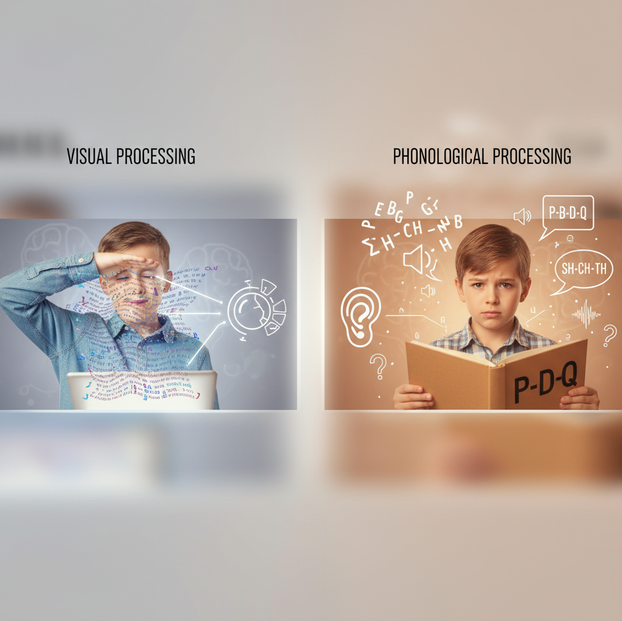
Visual vs. Phonological Processing: Irlen Syndrome & Dyslexia differences. Helen Irlen explained.
The fundamental difference between Irlen Syndrome and dyslexia lies in how the brain processes information. Dyslexia is a language-based learning disability that affects phonological processing—the ability to recognize and manipulate the sounds of language. Individuals with dyslexia struggle with decoding skills, word recognition difficulty, and connecting letters to their corresponding sounds, regardless of how the text appears visually.
Conversely, Irlen Syndrome is a perceptual disorder affecting visual processing, specifically how the Visual Cortex and Magnocellular Pathway handle light wavelength sensitivity and contrast sensitivity. People with this condition experience visual distortions when reading—letters may appear to move, blur, swirl, or disappear on the page. These visual symptoms occur because of how their brain processes certain light wavelengths, particularly under fluorescent light or bright light conditions.
Irlen Syndrome and Light Sensitivity Reading Challenges
Irlen Syndrome reading challenges: Light sensitivity impacts dyslexia. Helen Irlen method.
Helen Irlen first identified this condition in the 1980s, recognizing that some individuals experience pattern glare and visual stress syndrome when viewing high-contrast materials like black text on white paper. The Irlen Method employs colored overlays and tinted lenses—specifically calibrated spectral filters—to reduce visual discomfort and environmental lighting sensitivity. These chromatic interventions work by filtering out specific wavelengths that trigger perceptual dysfunction.
Meanwhile, dyslexia interventions focus on phonics-based instruction, structured literacy programs, and strategies to improve decoding problems. No amount of colored filters will address the underlying phonological deficit in dyslexia, just as phonics instruction won’t eliminate the visual distortions experienced with Irlen Syndrome. This difference in treatment approach underscores why accurate differential diagnosis is critical for reading disability diagnosis.
Reading Difficulty Symptoms: Comparison and Distinctions
| Characteristic | Irlen Syndrome | Dyslexia |
| Primary Issue | Visual perception disorder | Language-based learning disability |
| Common Symptoms | Text appears to move, blur, or distort; photophobia | Letter reversal, poor spelling, slow reading speed |
| Affected Area | Visual cortex processing | Phonological processing centers |
| Primary Treatment | Colored overlays, tinted lenses | Phonics instruction, literacy intervention |
| Diagnosis By | Irlen Screener, Irlen Diagnostician | Educational psychologist, reading specialist |

Can You Have Both Irlen Syndrome and Dyslexia?
Research indicates that some individuals experience comorbid conditions, having both visual and phonological processing issues simultaneously. The International Dyslexia Association acknowledges that reading difficulties can stem from multiple sources. When both conditions coexist, comprehensive assessment becomes even more critical, requiring evaluation by both an Educational Therapist for literacy challenges and potentially a behavioral optometry specialist for visual efficiency concerns.
This overlapping presentation explains why some students with diagnosed dyslexia continue struggling despite intensive phonics intervention. These individuals may benefit from addressing both their decoding disorder through specialized instruction and their visual stress through spectral modification. A thorough cognitive assessment and visual screening can identify whether single or multiple factors contribute to reading comprehension difficulties.
Frequently Asked Questions
Is Irlen Syndrome scientifically recognized like dyslexia?
Irlen Syndrome remains controversial within the medical community. While dyslexia has extensive peer-reviewed research and recognition from organizations like the American Academy of Ophthalmology, scientific support for Irlen Syndrome is more limited. The College of Optometrists and other professional bodies recommend comprehensive eye exams to rule out standard vision problems before considering chromatic intervention approaches.
How do I know if my child has Irlen Syndrome or dyslexia?
Distinguishing between these conditions requires professional assessment. If your child reports that letters move, blur, or disappear on the page, or experiences eye strain reading under lights, consult an Irlen Screener or behavioral optometry specialist. If they struggle primarily with sounding out words, spelling, and phonemic awareness, evaluation by an educational psychologist or reading specialist for dyslexia is appropriate.
Do colored overlays help dyslexia or Irlen Syndrome?
Colored overlays and tinted lenses specifically address the visual distortions associated with Irlen Syndrome by filtering problematic light wavelengths. They do not treat the phonological processing deficits characteristic of dyslexia. Some individuals with dyslexia may report subjective comfort using colored filters, but these assistive reading tools don’t address the underlying decoding skills necessary for literacy development.
What professionals diagnose these different reading disabilities?
Dyslexia diagnosis typically involves educational psychologists, neuropsychologists, or reading specialists who conduct comprehensive cognitive assessments examining phonological processing, decoding, and language skills. Irlen Syndrome identification requires an Irlen Screener for initial evaluation and an Irlen Diagnostician for precise spectral filter selection. Some developmental optometrists also evaluate visual stress and perceptual processing difficulties through vision therapy assessments.