




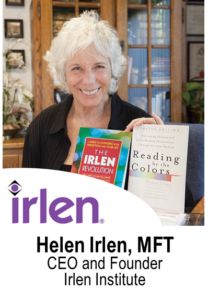
 Helen L. Irlen is an internationally recognized educator, researcher, therapist, scholar, and expert in the area of visual-perceptual problems. She is a graduate of Cornell University. Ms. Irlen has been in the field of education for over 40 years. Her background includes 15 years as a School Psychologist, 30 years as a Child and Family Therapist, Educational Therapist, founder and Director of the Adult Learning Disabilities Program and Assistant Professor of Adult Learning Disabilities at California State University/Long Beach, instructor in psychology at Cornell University, and research assistant at Cornell. She has been recognized for her dedication to working with children and adults and is listed in Who’s Who in California, Who’s Who in Asia and the Pacific Nations, International Woman of the Year (1999-2000), International Who’s Who of Professionals, Kingston’s National Registry of Who’s Who, and the Dictionary of International Biography.
 Dr. Daniel Amen is a physician, adult and child psychiatrist, and founder of Amen Clinics. Amen Clinics has the world’s largest database of brain scans for psychiatry totaling more than 200,000 SPECT scans on patients from 155 countries. He is the founder of BrainMD, a fast-growing, science-based nutraceutical company, and Amen University, which has trained thousands of medical and mental health professionals on the methods he has developed. In addition, he has produced 16 national public television shows about the brain and his online videos on brain and mental health have been viewed over 300 million times. Dr. Amen is a 12-time New York Times bestselling author, including Change Your Brain, Change Your Life, The End of Mental Illness, Healing ADD, and You, Happier.
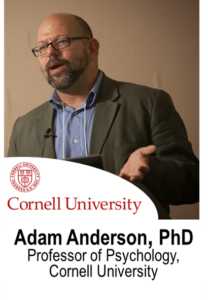 Dr. Adam Anderson is a Professor of Psychology at Cornell University specializing in affective and cognitive neuroscience. His research examines how the central and peripheral nervous systems interact to support emotion and cognition. Considering the psychological, physiological, and neural levels of analysis, a guiding principle in his work is understanding the function of emotions as distinct tools intended to help rather than hurt us. With over 150 publications, Dr. Anderson employs advanced brain imaging techniques to better understand a variety of human cognitive and affective functions, including how light affects the visual system.
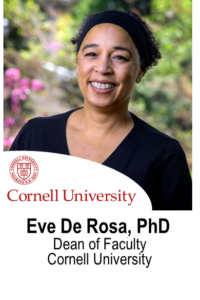 Dr. Eve De Rosa is a Mibs Martin Follett Professor in Human Ecology and Cornell University Dean of Faculty. She received her Ph.D. in Experimental Psychology from Harvard University and then received training in human neuroscience as a postdoctoral fellow at Stanford University School of Medicine. Her work is best described as comparative cognitive neuroscience, which is characterized by two related approaches. One is a cross-species approach, comparing rat models of the neurochemistry of attention and learning to humans, focusing on the neurochemical acetylcholine. The other is an across-the-lifespan approach, examining the cholinergic hypothesis of age-related changes in cognition.
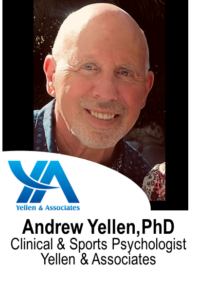 Dr. Andrew Yellen is a licensed psychologist specializing in both clinical and sports psychology, and founding owner of Yellen & Associates Psychological, Educational, Speech & Language Services. Dr. Yellen lectures nationally and internationally on various topics including behavioral management, learning disabilities, and sports psychology, and is a Fellow and Diplomate of Prescribing Psychologists’ Register, The International College of Prescribing Psychologists, and the American Board of Medical Psychotherapists. He is author of The Art of Perfect Parenting & Other Absurd Ideas, Understanding the Learning Disabled Athlete, and Social Facilitation in Action.
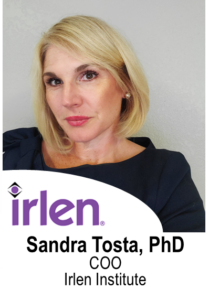 Dr. Sandra Tosta holds a Bachelor of Science in Human Development from Cornell University and a PhD in Educational Psychology from the University of California, Los Angeles. She has expertise in both quantitative and qualitative primary research in both corporate and academic settings. She has authored a variety of papers on Irlen Syndrome and related topics and contributed a chapter on parenting in a multimedia society in Marc Bornstein’s Handbook of Parenting: Volume 5. She currently serves as Chief Operating Officer for the Perceptual Development Corporation at the Irlen Institute International Headquarters and President of the Irlen Syndrome Foundation.
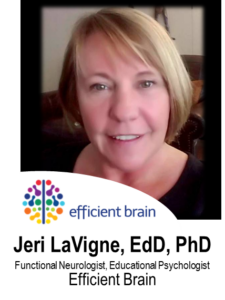 Dr. Jeri LaVigne is an educational psychologist who is most interested in the health of your brain. She also holds a Diplomate in Functional Neurology She has been working in the field of brain health for more than 30 years helping children and adults reach their goals and dreams by teaching them how to better process information and create optimal brain performance. Dr. LaVigne is an Irlen Director, certified in the Irlen Method, and is a Neurofeedback practitioner. Using unique, innovative, science-based approaches to hemispheric brain balancing, dramatic improvement is achieved by persons with various issues like ADHD, anxiety, depression, focus, headaches, academic issues, and emotional imbalance.
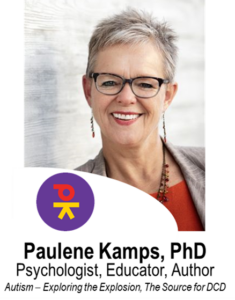 Dr. Paulene Kamps is a developmental/educational psychologist with a multidisciplinary background and over 20 years of front-line work in various settings. Dr. Kamps specializes in a formal mental health condition called developmental coordination disorder (DCD). She is especially fascinated by the interplay of autism and DCD, and the impact of DCD in particular, as it pertains to cognitive abilities, play behaviors, academic performances, social integration, emotional regulation, and psychological well-being. Dr. Kamps is a distinguished speaker, and author of Autism – Exploring the Explosion and The Source for DCD.
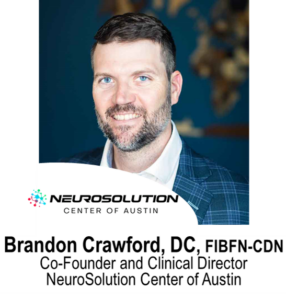 Dr. Brandon Crawford is Co-Founder and Clinical Director of NeuroSolution Center of Austin. Since 2010, Dr. Crawford has been a pioneering force in chiropractic care and holistic healing. Trained by the brightest minds in chiropractic, functional neurology, and functional endocrinology, his dedication and passion have earned him recognition as a board-certified Developmental Functional Neurologist. As an active member of the International Association of Functional Neurology & Rehab, he never stops pushing the boundaries of what is possible in patient care.
 As the CEO of Get Clients Everywhere, Marie Fratoni works globally to help professionals build solid, long-term, successful businesses. She coaches entrepreneurs to become savvy, social, and successful through cultivating professional relationships that are fulfilling and profitable, and by providing sound business-building strategies. She is a staunch advocate for women in business, founding and leading several professional groups including the Women’s Professional Development Network (WPDN) in Atlanta.
 Dr. Kelly Auld-Wright works as a research associate and instructor for the Collaborative for Leadership in Ayres Sensory Integration (CLASI) at Keck Graduate Institute and has taught advanced training courses in ASI nationally and internationally. She currently serves as the co-research chair for the American Occupational Therapy Association’s (AOTA’s) Sensory Integration and Processing Special Interest Section.
 Dr. Aja Roley is an occupational therapist (OT) specializing in pediatrics across clinic, home, school, and community environments. She received her master’s degree in OT from the University of Southern California and her doctoral degree in OT from Thomas Jefferson University. She is certified in Sensory Integration through USC/WPS and has an advanced practice certificate in neuroscience from Thomas Jefferson University. Aja specializes in assessment and intervention of infants, children, and young adults with varying diagnoses, including but not limited to autism, ADD/ADHD, social-emotional vulnerabilities, feeding difficulties, and visual impairment. She also works as an instructor for the non-profit organization, the Collaborative for Leadership in Ayres Sensory Integration (CLASI). She volunteers her time as a normative data collector for the Evaluation of Ayres Sensory Integration (EASI).
 Dr. Thomas Schweller is triple board certified neurologist in Neurology & Psychiatry, Pediatrics and Electroencephalogram (EEG). In 1988, Dr. Schweller began his private practice in San Diego which has consisted of private patients, AME’s, QME’s and independent medical examinations for the Department of Social Services, Social Security in neurology and pediatrics. He also served a clinical teaching appointment in the Department of Pediatrics and the Department of Neurology at Mercy Hospital, San Diego.
 Raven-Symoné has been a household name and a fan favorite for most of her life, commanding an iconic Hollywood career as a multi-hyphenate, actor, singer, producer, and director. Most recently she starred, executive produced, and directed the self-titled and critically acclaimed Disney Channel series, “Raven’s Home,” which ran for 6 seasons. This series was a welcomed return to the Disney family after her long run as a teenager on “That’s So Raven,” which marked the first time in the Disney Channel’s history that a Black woman starred in a self-titled comedy series. At age 19, Raven was named producer of the series, which won four NAACP Image Awards, two Nickelodeon Kids’ Choice Awards, and a Primetime Emmy Award nomination for Outstanding Children’s Program, during its successful run.
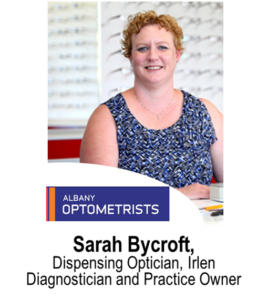 Sarah Bycroft, RDONZ (Dispensing Optician, Irlen Diagnostician and Practice Owner) For Sarah, one of the most pleasing aspects of her job is seeing how the result of improved vision enables her patients to achieve more in everyday life. As an Irlen Diagnostician she is qualified to diagnose and treat Irlen Syndrome. In addition, Sarah is a qualified Dispensing Optician with a skill for selecting frames and lenses for her patients’ specific needs. An Albany resident, wife and mother, she has been helping her community see better since 2002.
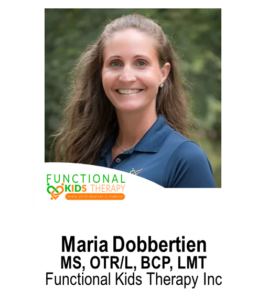 Maria Dobbertien, MS, OTR/L, BCP, LMT Maria is the owner and operator of Functional Kids Therapy Center LLC. She has worked in a variety of settings including inpatient, outpatient, pediatric intensive care and adult rehabilitation. She graduated from Western Michigan University with her Master’s degree in science with an emphasis in Occupational Therapy. She is one of the only certified Irlen Screeners and Diagnosticians in the state of Michigan. Maria is certified in Interactive Metronome, IM Home, Advanced Therapeutic Listening programs, Handwriting Without Tears Level 1, Rhythmic Movement Training (levels 1, 2 & 3), and Brain Gym. Maria is trained in John Barnes Myofascial Release techniques (including MFR healing, MFR I, Cervical Thoracic, MFR Rebounding, MFT Unwinding, and Pediatric MFR).
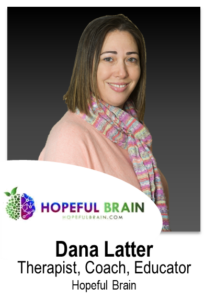 Dana Latter is a practitioner in the field of neurodevelopmental disorders, with a special focus on primitive reflexes integration. Her journey began when she noticed delays in her son’s development. This remarkable story is detailed in the book “Against the Odds,” which she co-authored with Dr. Leonard Press. With over two decades of experience as an educator and therapist, Dana has dedicated her career to improving the lives of individuals affected by neurodiversity. Her expertise lies in implementing a holistic approach that integrates neurology, nutrition, and cognitive therapies to address the underlying causes of developmental challenges.
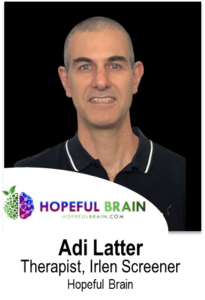 Adi Latter is a holistic practitioner specializing in primitive reflexes integration, applying neurofeedback and Irlen screening in his London clinic. As a parent of two children facing developmental challenges, Adi was deeply inspired by his children’s remarkable progress. Motivated by this experience, he resolved to impact the lives of others facing similar situations. Adi’s caring attitude and unwavering commitment to his patients’ health empower individuals and families to navigate the complex landscape of developmental challenges, providing practical strategies and support to achieve meaningful improvements in daily functioning and quality of life.
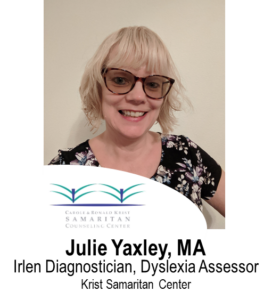 Julie Yaxley, MA is an Irlen Diagnostician and Dyslexia specialist with 36 years teaching experience of both adults and children. Her background also involved work as Editor, Writer, and Consultant to promote best use of computing in schools, including designing educational software. Currently, she works at the Krist Samaritan Center in Houston which is a non-profit organization dedicated to changing lives through counseling, testing, tutoring and speech therapy.
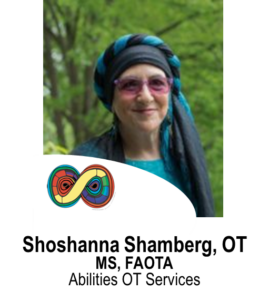 Ms. Shoshana Shamberg has over 35 years of experience as an educator, consultant, therapist and professional trainer. Ms. Shamberg has degrees in both occupational therapy and special education, specialized certifications, and was awarded the prestigious Roster of Fellows by the American OT Association. She was a national Brain Gym Instructor combining, OT, and Irlen Syndrome Testing and Professional Trainings, as a Certified Irlen Screener/Diagnostician. She has published extensively in professional journals, consumer publications, and textbooks for medical and design/build professionals.
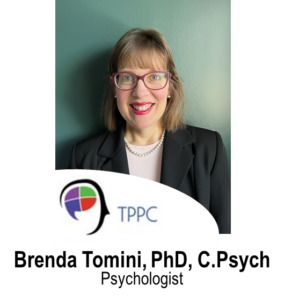 Dr. Brenda Tomini is a psychologist who is registered in the provinces of British Columbia, Alberta, Saskatchewan, Manitoba, Ontario, and Prince Edward Island. She received her Ph.D. in Industrial/Organizational Psychology, from the University of Windsor, She is also a Certified Human Resources Professional, a Registered Rehabilitation Professional., a Certified Brain Health Coach, with the Amen Clinics, a Certified Irlen Screener, and a Certified NAET Practitioner/Instructor. Dr. Tomini works with a wide variety of adults in career transition including individuals who have experienced injuries in the workplace or motor vehicle accidents, as well as individuals on Long Term Disability and former members of the Canadian Armed Forces.
 Dr. Colvard is a Naturopathic Physician and a board-certified Fellow of the American Board of Naturopathic Oncology – one of only 130 FABNOs nationwide. Dr. Colvard is currently specializing in Oncology at the Susan Samueli Integrative Health Institute at the University of California, Irvine. Prior to UCI, she served as the Director of Integrative Training for CHI Healthcare in Washington DC and as a Naturopathic Physician at Cancer Treatment Centers of America (CTCA) hospitals. With her background in neuroscience, Dr. Colvard has always been particularly intrigued by the roles that the brain and our emotional states play in our overall health.
 Dr. Christine King With over 25 years of expertise in learning and change, Dr. King is a passionate specialist who has led and supported individuals, organizations, and communities globally. Currently serving as an Adjunct Associate Professor at the University of the Sunshine Coast and a Senior Researcher at Monash University, Dr. King is dedicated to advancing learning for sustainability, food security, poverty alleviation, and climate change adaptation. As the Director of Learn to Learn, her consulting business focuses on strategic, innovative, and multi-stakeholder learning processes leading to systemic change.